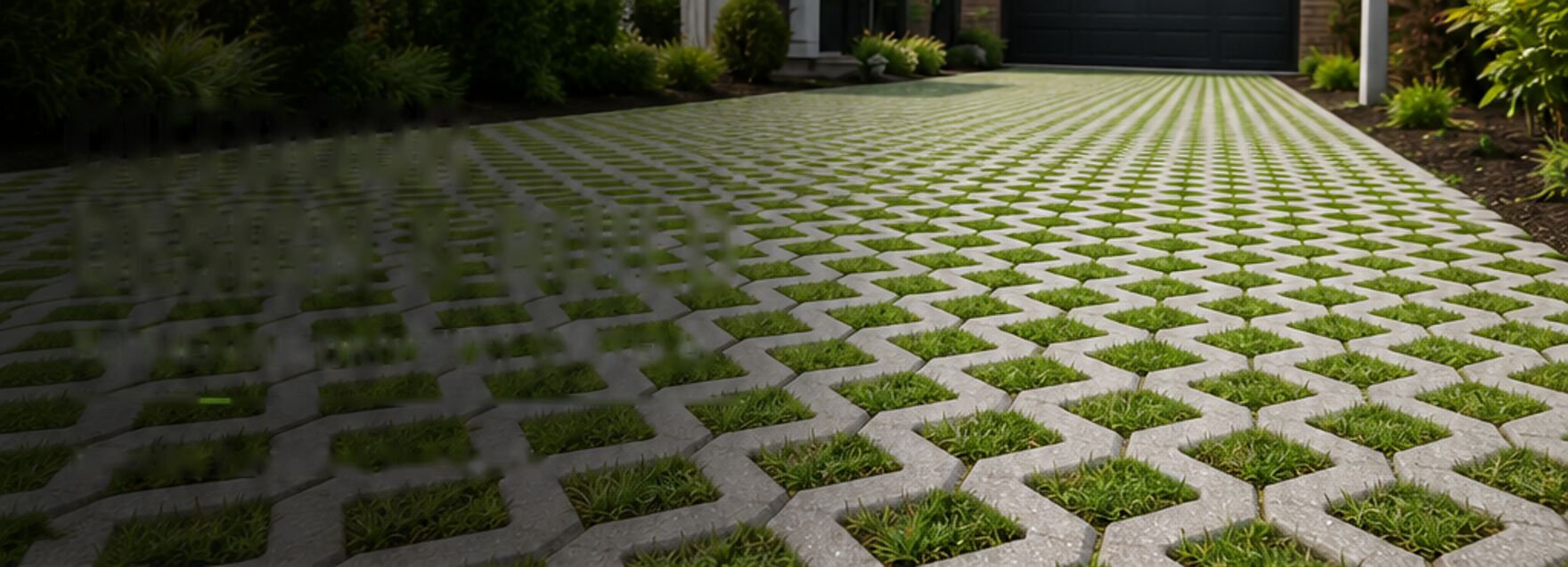
Rain goes down, not to the street
A permeable drive takes the same rain a slab sheds and sends it through the joints into an open-graded reservoir underneath, where it soaks into the soil. Built to carry vehicle traffic through Northeast Ohio freeze and thaw.
Excavated 15 inches. Open-graded base. No pipe to the street.
Where the water goes
That one difference is what fixes the puddle at the bottom of your drive, the ice sheet in front of the garage, and the runoff that ends up in your neighbor’s yard.
Infiltrates instead of discharging
Rainfall soaks into the reservoir and the soil under the drive rather than running to the storm sewer. Less water leaving the property, less load on the street system, and groundwater recharged where it fell.
Why homeowners choose permeable
Seven steps, start to finish
What’s under your driveway
Vegetation options
Low maintenance, drought tolerant, and stays green longer.
Durable grass blends that thrive in permeable systems with proper care.
A clean, low-maintenance alternative with excellent permeability.
Keeping it working
- Sweep or vacuum the surface once or twice a year so the joints don’t silt in.
- Keep mulch, topsoil and clippings off the drive — that’s what clogs the joints.
- Never sand it. Sand seals a permeable surface faster than anything else.
Ninety freeze cycles a year
Northeast Ohio isn’t a service area, it’s a specification. Snowplows, deicing salt and the freeze-thaw cycle are what these systems get detailed around.
- Engineered for freeze and thaw cycles
- Designed for snow removal
- Built to support vehicle traffic
- Promotes proper drainage
- Long-term durability and performance
Worth knowing
- Water that soaks in isn’t sitting on the surface waiting for the next freeze, which usually means less salt.
- Runoff that was reaching a neighbor, a foundation or a garage slab gets absorbed instead of shed.
- Some Northeast Ohio stormwater programs credit reduced runoff.
- Permeable isn’t right everywhere. Heavy clay, a high water table, steep pitch or a tight setback can all point back to a traditional section — and we’ll say so.
What the install includes
- Saw-cut, break, remove and dispose of the existing concrete or asphalt drive, recycled wherever possible.
- Excavate the work area to a planned depth of approximately 15 inches below finished grade.
- Install geotextile stabilization fabric over the prepared subgrade.
- Place and compact 10 inches of aggregate base in lifts.
- Screed a 1-inch leveling layer of clean chip stone.
- Set the engineered permeable paver system to manufacturer specifications.
- Fill the cells with your choice of vegetation or decorative aggregate.
- Install an underdrain or overflow outlet where infiltration alone won’t carry the volume.
- Final grading, cleanup, and haul-off within the stated allowance.
- Care instructions for keeping the system working.
Permeable driveway, four frames
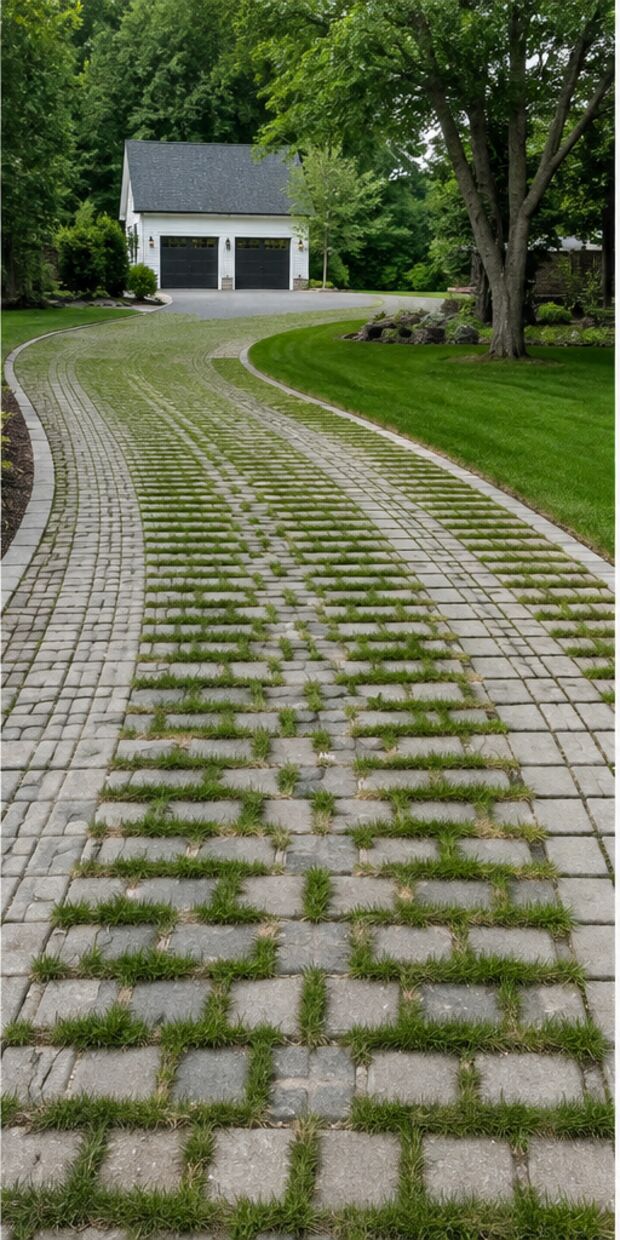 After
AfterFind out whether your drive can go permeable.
We check the soil, the grade, the setbacks and where your water goes now — and we’ll say so plainly if a traditional section is the better call.